
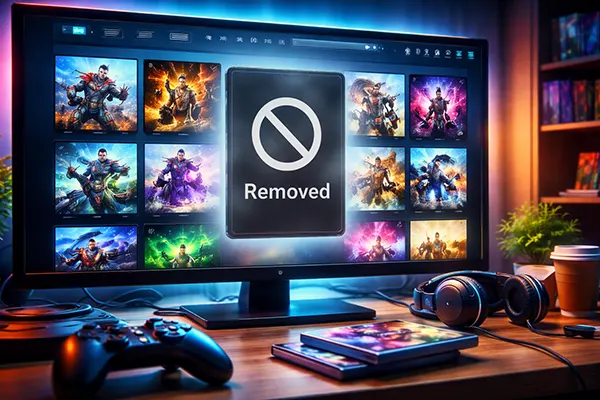
Digital distribution has changed how players buy and store video games. Instead of discs or cartridges, most titles are now delivered through services such as Steam, PlayStation Store, Xbox Marketplace, Nintendo eShop and other online catalogues. While this approach offers convenience, it also raises questions about long-term access. Occasionally a game disappears from sale without much notice, leaving players unsure about the status of their purchased copies. Understanding why delistings happen and how digital ownership actually works has become increasingly important for players in 2026.
One of the most common reasons a game disappears from a digital store is the expiration of licensing agreements. Many titles rely on licensed music, sports teams, real-world brands or intellectual property owned by third parties. When these contracts expire and cannot be renewed, publishers may lose the legal right to sell the game. This situation frequently affects racing and sports titles, where licensed cars, tracks or leagues are central to the experience.
Corporate decisions also play a role. Publishers sometimes remove older games because they no longer want to maintain support infrastructure or because the title conflicts with a newer release. In some cases, companies prefer to re-launch the game later as a remastered edition. Delisting can therefore become part of a broader business strategy rather than a purely legal necessity.
Technical compatibility is another factor. As operating systems, consoles and distribution software evolve, maintaining compatibility with older titles can require ongoing development work. If the expected revenue from continued sales does not justify the cost of updates and testing, publishers may choose to remove the product from sale instead of maintaining it indefinitely.
The industry has seen many notable cases where popular games were removed from stores. Titles such as Forza Motorsport 7, several older FIFA entries and numerous licensed racing games disappeared from sale once licensing agreements expired. These games remained accessible to existing owners but were no longer available for new purchases.
Music licensing has also caused removals. Rhythm games and titles that include real-world soundtracks often rely on contracts with music publishers. Once those agreements expire, the publisher may choose not to renegotiate them due to cost or complexity, leading to delisting even when the game itself remains playable.
Another example involves games based on film franchises or comic book characters. When rights to those properties change hands, digital sales can stop immediately. This has happened with several superhero and movie-based titles over the past decade, demonstrating how closely digital distribution depends on intellectual property agreements.
In most cases, players who purchased a game before it was removed from sale can continue to download and play it. Digital storefronts typically keep the product in the customer’s account library even after it is delisted. This means the purchase remains associated with the user’s profile and can usually be reinstalled on supported devices.
However, this access is not identical to traditional ownership. When buying a digital game, the user normally receives a licence to use the software rather than full legal ownership of a copy. The terms of service of major stores clearly describe this arrangement. As a result, long-term availability depends on the store maintaining the infrastructure that allows downloads.
In practice, major distribution services rarely remove already purchased games from libraries, because doing so would damage trust among players. Nevertheless, the possibility remains that certain features could disappear over time if servers or account systems change. This highlights the difference between physical copies stored at home and software tied to an online account.
Downloadable content can become more complicated after delisting. If additional content is sold separately from the main game, players may lose the ability to purchase it once the base title disappears from sale. Existing owners of the DLC usually retain access, but new players cannot obtain it unless the publisher restores the listing.
Game updates also depend on developer support. After a game is removed from stores, the development team may stop releasing patches or technical improvements. This means bugs may remain unresolved, and compatibility with newer hardware might gradually decline as operating systems and drivers evolve.
Online modes are particularly vulnerable. Multiplayer servers require continuous maintenance and operational costs. When a publisher determines that the active player base is too small, servers may be shut down. At that point the online component disappears entirely, even though the single-player part of the game might still function normally.

The modern distribution model relies heavily on licensing rather than ownership. Players purchase the right to access software under specific conditions defined by the store and the publisher. This system allows instant downloads and automatic updates but also places control of access in the hands of the distribution service.
One challenge is long-term preservation. Physical media can survive for decades if stored properly, but digital storefronts depend on servers, authentication systems and corporate infrastructure. If a store eventually closes or changes its account system, the long-term availability of older purchases becomes uncertain.
Another issue concerns interoperability between generations of hardware. A digital licence might only be guaranteed for a particular console generation or operating system. While backward compatibility has improved in recent years, there is no universal guarantee that a game purchased today will remain playable on hardware released many years later.
One practical approach is maintaining local backups where the system allows it. Some PC distribution services permit offline installations or backup copies of game files. While these backups still require licence validation in many cases, they provide an additional layer of security if the original download becomes unavailable.
Another option involves paying attention to store policies before making purchases. Different distribution services have different approaches to long-term support, offline play and download availability. Understanding these policies helps players choose stores that prioritise stability and continued access to purchased titles.
Finally, the growing discussion around digital preservation has led to cooperation between archives, museums and the gaming industry. Organisations dedicated to software preservation are working to ensure that historically important titles remain accessible for research and cultural study, even when commercial distribution has ended.
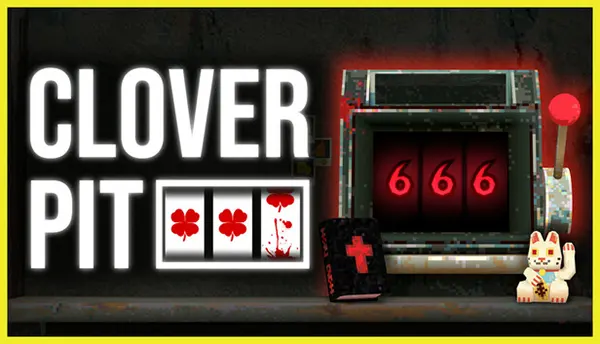
CloverPit turns one of gambling’s most familiar machines into the …
Microgaming is widely recognised as one of the formative names …