
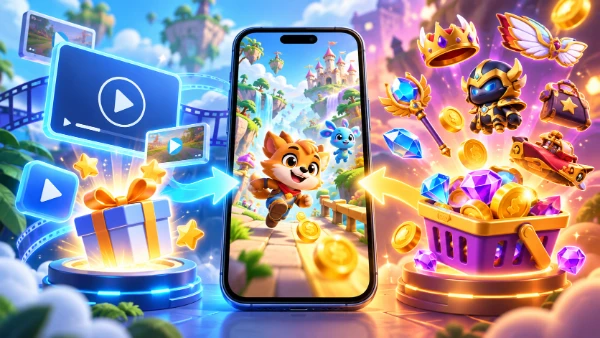
Mobile game monetisation in 2026 is no longer neatly divided between titles funded by advertising and games built around in-app purchases. A growing number of studios now combine both income sources, using advertising to generate value from players who rarely spend money while giving paying users access to optional purchases, subscriptions, passes, cosmetic items and progression-related offers. This shift is closely connected to a mature mobile gaming market in which attracting another install has become less important than generating sustainable value from the people who already play. Sensor Tower reported that mobile gaming produced about $82 billion in in-app purchase revenue in 2025 even as download growth weakened, while advertising remained a substantial source of income across ad-supported titles. The result is a broader move towards dual monetisation: not simply adding adverts to an existing shop, but designing different ways for different types of players to support the same game without forcing everyone into one spending pattern.
For much of mobile gaming’s history, monetisation strategies were strongly associated with genre. Hyper-casual games generally depended on large download volumes and frequent advertising because their audiences were broad, sessions were short and relatively few players made purchases. Strategy, RPG and other mid-core games took the opposite route, relying much more heavily on in-app purchases from smaller groups of highly engaged players. Those boundaries have become less rigid. AppsFlyer’s 2026 monetisation research shows that hybrid models are appearing across gaming categories, while casual games now demonstrate particularly varied revenue mixes. Developers that once concentrated almost exclusively on purchases are introducing carefully placed advertising, while ad-heavy games are adding permanent purchases, event offers and progression systems capable of generating direct player spending.
The economic reason is straightforward. Downloads are no longer expanding rapidly enough in many established markets to make scale alone a dependable growth strategy. Sensor Tower’s 2026 State of Gaming analysis found that mobile game downloads declined while time spent increased slightly and revenue continued to grow. That combination changes the question developers need to answer. Instead of asking only how many new people can be persuaded to install a game, studios increasingly need to understand how much value can be generated across a player’s entire relationship with it. A person who never buys a bundle may still contribute advertising revenue for months. Another player may dislike adverts but willingly pay for a starter pack, season pass or ad-removal option. Treating those users identically leaves potential revenue unused.
Rising user-acquisition costs strengthen the case for this approach. When acquiring a player becomes more expensive, developers have stronger incentives to improve the lifetime value of each successful install rather than simply buying more traffic. Sensor Tower’s 2026 reporting describes mobile gaming as shifting from scale towards efficiency, with retention, reactivation and deeper monetisation becoming more important. Dual monetisation fits that environment because it creates more than one route to revenue after acquisition. A studio does not have to depend entirely on converting a free player into a purchaser, nor does it have to fill every session with adverts. Revenue can instead come from a combination of voluntary ad engagement, occasional purchases and spending by the game’s most committed users.
The central advantage of dual monetisation is that mobile game audiences are economically diverse. Only part of a typical free-to-play audience will ever make a purchase, and spending behaviour varies considerably even among buyers. Some players may spend once on an inexpensive introductory offer, others may buy regularly, and many will never open the payment screen at all. An IAP-only game therefore risks earning nothing directly from a substantial share of its active audience. Advertising gives those players another way to generate revenue through normal engagement. A rewarded video watched in exchange for an extra life, additional energy or another attempt creates value without requiring a payment, while the in-game shop remains available for users who prefer direct purchases.
The relationship can work in the opposite direction as well. A game built largely around advertising may have highly engaged players who would prefer to pay for convenience rather than watch repeated adverts. Adding an ad-removal purchase, premium bundle, cosmetic pack or progression pass allows the game to monetise that preference. This is one reason the distinction between traditional hyper-casual and hybrid-casual games has become increasingly important. Rather than relying entirely on very simple mechanics and advertising volume, hybrid-casual titles can combine accessible gameplay with progression, collections, events and purchasable content. These additional systems give players reasons to return over longer periods and create opportunities for revenue that are not tied to the number of adverts displayed during each session.
Industry data illustrates why developers are interested in keeping both options available. Sensor Tower estimates that mobile games generated more than $12 billion in advertising revenue across 19 measured markets in 2025, with trillions of advertising impressions delivered during the year. At the same time, mobile gaming IAP revenue remained close to $82 billion globally. The two figures measure different scopes and should not be treated as directly equivalent, but they demonstrate that both revenue channels are economically significant. In 2026, abandoning either one without a clear design reason can mean ignoring a substantial part of player behaviour. The more useful question for many studios is therefore not whether adverts or purchases are superior, but which combination fits the game, audience and expected session pattern.
The rise of dual monetisation does not mean that mobile games simply display more adverts. How advertising is presented matters because intrusive placements can shorten sessions, damage retention and reduce the willingness to spend. Rewarded advertising has become especially useful because the player normally chooses whether to watch the advert in exchange for a clearly stated in-game benefit. Common examples include continuing after failure, doubling a post-level reward, receiving additional currency, shortening a timer or gaining another attempt at a challenge. The transaction is easy to understand: the player gives a small amount of attention and receives something useful inside the game. That is fundamentally different from an advert that unexpectedly interrupts active play.
This format also allows developers to monetise players without immediately putting essential progression behind a purchase. Consider a puzzle game in which a player runs out of moves near the end of a level. One option might be buying a bundle of additional moves, while another might be watching a rewarded advert for a smaller extension. The first option suits somebody willing to spend money for convenience; the second allows a non-paying player to continue while still generating revenue for the developer. Both users remain inside the same game, but they contribute economically in different ways. Used carefully, this arrangement can reduce the pressure to convert every engaged player into a payer.
The distinction between optional and forced advertising is particularly important. System-initiated interstitial adverts can still be useful in suitable games, especially between naturally separated rounds or levels, but frequency and timing need careful control. An advert inserted during a demanding action sequence can feel disruptive, whereas the same advert shown after a completed round may be easier to accept. Developers increasingly examine advertising as part of the wider player journey rather than treating it as a separate layer added after the game has been designed. In a hybrid model, this is essential because excessive advertising can undermine purchases, while excessively restrictive purchase mechanics can make the advertising route feel intentionally inferior.
In-app purchases have also become more varied. Selling virtual currency remains common, but many successful mobile games now distribute spending opportunities across different parts of the experience. These can include starter packs for new users, cosmetic items, limited event bundles, season passes, permanent convenience upgrades, additional content and purchases that remove advertising. Each product serves a different motivation. Cosmetics appeal to personalisation, passes can reward regular play over several weeks, while ad removal gives frequent players a direct way to change how they experience the game. This variety is important because a single shop full of currency bundles does not reflect the full range of reasons why users may be prepared to pay.
Live operations have made these purchases more closely connected to ongoing content. Instead of releasing a mobile game and leaving its economy largely unchanged, many developers now operate titles through recurring events, new challenges, themed content and limited reward tracks. Sensor Tower identifies live operations as one of the mechanisms helping publishers improve engagement and lifetime value in a market where new installs are harder to expand. For players, this can mean that optional purchases are linked to current activities rather than appearing as generic offers. For developers, regularly refreshed content creates additional opportunities to monetise committed users without depending on a constant stream of new downloads.
However, more purchasing opportunities do not automatically produce a healthier game economy. Poorly designed offers can create frustration when progress becomes deliberately slow unless money is spent, while aggressive countdowns and repeated pop-ups can weaken trust. Dual monetisation is most sustainable when each revenue option has a clear purpose and the underlying game remains enjoyable without constant transactions. A player who declines a purchase should still have a reasonable route through normal gameplay, just as someone who chooses not to watch an advert should understand what alternative is available. The strongest hybrid designs tend to treat monetisation as optional value exchange rather than as a sequence of obstacles placed between the player and the game.

The market conditions visible in 2026 make hybrid monetisation more than a short-lived design trend. Sensor Tower reported that global mobile gaming IAP revenue reached roughly $40 billion in the first half of 2026, down about 2% compared with the same period a year earlier. Over that period, gaming digital advertising moved in the opposite direction: ad spend across the markets measured by the company reached approximately $7 billion, an increase of 8%, while ad impressions rose by 14% to about 1.4 trillion. These figures do not mean advertising is replacing purchases. Instead, they show why developers are reluctant to depend on a single source of income when one revenue channel can strengthen or weaken independently of another.
Technology used for user acquisition is adapting to the same reality. In May 2026, Unity expanded its advertising tools with campaigns designed specifically around hybrid return on ad spend, combining predicted advertising income and in-app purchase value when assessing users. This is a significant practical change. In an older IAP-focused model, a player who never purchased anything could look commercially unimportant even if that person played frequently and generated substantial advertising revenue. In an advertising-only model, a rare but valuable purchaser could be evaluated poorly if spending was not included. Hybrid measurement gives studios a more complete picture of what different users contribute over time.
This also affects game development decisions. If developers know that non-paying users can contribute meaningful advertising revenue, they have more reason to keep those users active instead of designing progression almost entirely around purchase conversion. At the same time, purchase data can show where highly engaged players want greater convenience, personalisation or access to optional content. The combined model therefore links monetisation more closely with retention. A player who stays for months can create value through dozens of small advertising interactions, several purchases or a mixture of both. In a mature market, that long-term relationship can matter more than achieving a temporary surge in installations.
For players, the most visible effect is greater choice in how free-to-play games are funded. One person may accept rewarded adverts in return for bonuses and never spend money. Another may make a small purchase to remove adverts permanently. A third may ignore most advertising but buy a season pass because they play regularly. These behaviours can coexist in the same game, which reduces the need for developers to design every monetisation decision around a single ideal customer. When implemented carefully, dual monetisation can therefore make free access economically viable while preserving paid options for users who value convenience or additional content.
There are still clear risks. Combining two revenue systems can become more intrusive rather than less intrusive if studios attempt to maximise every opportunity at once. A game containing frequent interstitial adverts, rewarded-video prompts, multiple currencies, timed bundles and repeated shop notifications can quickly create monetisation fatigue. Developers must therefore pay attention not only to revenue per player but also to session length, retention, purchase behaviour and the points at which users leave. A short-term rise in advert impressions is of limited value if it causes regular players to abandon the game. Similarly, an aggressive purchase system may increase immediate spending while weakening the community required to support a live game over several years.
The defining change in 2026 is therefore not that advertising has defeated in-app purchases or that purchases have replaced advertising. Mobile games increasingly use both because modern audiences contain players with very different willingness to pay, tolerance for adverts and patterns of engagement. With download growth under pressure and the industry concentrating more heavily on lifetime value, studios have stronger incentives to generate revenue throughout a player’s relationship with a game rather than at a single payment point. Advertising can give non-paying users an economic role, while purchases provide a direct route for those prepared to spend. When those systems are balanced around the actual game rather than added indiscriminately, dual monetisation gives developers a more resilient business model and gives players more control over how they participate in a free-to-play economy.
Mobile game monetisation in 2026 is no longer neatly divided …
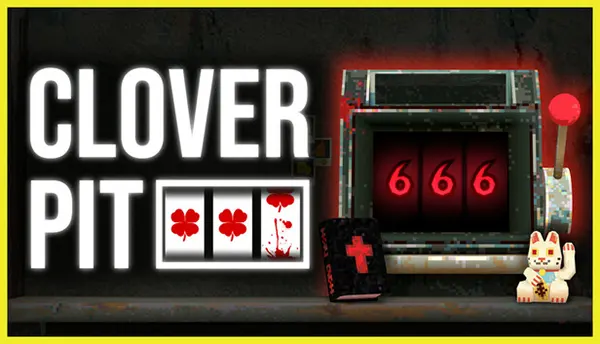
CloverPit turns one of gambling’s most familiar machines into the …